The Crock pot Method
of Soapmaking
As Presented By
Debora Yavas
After a year of research I
finally felt I had obtained enough knowledge and confidence to make my first
batch of soap. My research
consisted of reading all the soapmaking books that I was able to get my hands
on. I spent hours on-line reviewing
posts from soapmaking clubs particularly those on YahooGroups.com. This document is dedicated to the
caring, generous soapmakers on Yahoo Groups who graciously share their
knowledge everyday. This is my
attempt to pass on a little knowledge regarding this method and to provide
prospective soapmakers with the final boost that propels them into trying the
art of soapmaking.
The purpose of this document
is only to provide a pictorial of the crockpot method and should be used in
conjunction with soapmaking reference books. This should not be the only research
that you do before making soap, there are many comprehensive soapmaking guides
on the market that discuss every aspect of soap making in excruciating detail
so use those references as well. I
have included some of my most used Internet references for your use.
I hope you find this
document helpful and I wish you many hours of blissful soaping.
Debora
Equipment
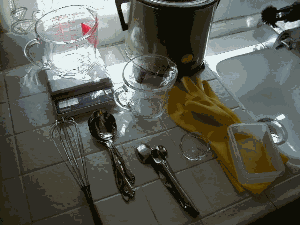 This
is my soapmaking equipment. It
consists of a 1970’s era crock pot, 4-cup glass measuring cup, 2-cup
glass measuring cup, gloves, small glass bowl for fragrance/essential oils,
postal scale accurate to 1/10th of an ounce, a selection of
stainless steel spoons, a stainless steel whisk, a plastic tub for measuring
sodium hydroxide, and a set of measuring spoons. I don't use thermometers. Not pictured are safety items such as
safety goggles, facemask used during the mixing of water and lye, long sleeved
apron, and pants and shoes. You
might also want to consider covering your flooring with a tarp to protect
it. Since I process my soap in my
sink I omit this step. Also, lye is
very corrosive on vinyl countertops so consider protecting your countertop if
it is made of something other than ceramic tile.
This
is my soapmaking equipment. It
consists of a 1970’s era crock pot, 4-cup glass measuring cup, 2-cup
glass measuring cup, gloves, small glass bowl for fragrance/essential oils,
postal scale accurate to 1/10th of an ounce, a selection of
stainless steel spoons, a stainless steel whisk, a plastic tub for measuring
sodium hydroxide, and a set of measuring spoons. I don't use thermometers. Not pictured are safety items such as
safety goggles, facemask used during the mixing of water and lye, long sleeved
apron, and pants and shoes. You
might also want to consider covering your flooring with a tarp to protect
it. Since I process my soap in my
sink I omit this step. Also, lye is
very corrosive on vinyl countertops so consider protecting your countertop if
it is made of something other than ceramic tile.
Important safety considerations
1) Sodium
hydroxide (lye) is a dangerous substance.
It can cause serious burns if it comes in contact with your skin. Vinegar should be close at hand as it
neutralizes lye. Care must be taken
when using this chemical in order to protect yourself, family, friends, and
customers, if you distribute your soap products. When making soap a minimum amount of
skin should be exposed. It is
prudent to use goggles and to wear a long sleeved shirt. It is also a good idea to wear pants and
shoes rather than shorts with no shoes.
2) Minimize
potential distractions before you begin.
Children and pets should not be in the vicinity. I have heard stories of soap makers
forgetting an ingredient only to remember as they were pouring the soap into
molds. I have also heard a story
about lye water being drunk by the husband when it was left unattended by the
soapmaker. The husband died. This is a serious chemical and must be
respected.
3) Use
stainless steel utensils when working with lye. Lye will eat right through aluminum,
Teflon, copper and tin. Wood
stirrers will eventually splinter.
4) The crock
pot method that I have documented below employs heat to make soap creating a
possible burn hazard.
5) Do your
homework by reading as much as you can on soap making processes. Determine which method(s) will be
right for your circumstance. I
chose the crock pot method because I have two children and did not feel
comfortable with the long curing time of cold process soap.
Resources
Authoritative
Agencies
www.cpsc.gov
http://vm.cfsan.fda.gov/~dms/cos-toc.html
Resources
Yahoo Groups is a great resource for
meeting others with your same interest.
You sign up and then join the groups of your choice. There are thousands of groups on every
subject. Search on soapmaking and
see what you get. Search for
toiletries too.
http://groups.yahoo.com
Thomas Register of American Manufacturers is an excellent source for
finding suppliers in your area. The
closer they are the less shipping charges will be, and shipping can add up when
you purchase heavy oils.
http://www.thomasregistry.com
HAPPI Magazine - Online magazine. You can also subscribe to their free
monthly printed magazine covering soaps, detergents, cosmetics &
toiletries, waxes and polishes, insecticides, aerosols and related chemical
specialties.
www.happi.com
Soap & Cosmetics Magazine - Online information as
well as a free subscription.
www.soapandcosmetics.com
Freebizmag.com - Free subscriptions to
various business magazines.
www.freebizmag.com
Entrepreneur.com - Business
information. You can also sign up
for a free trial issue of their magazine.
www.entrepreneur.com
Lye
Calculation Assistance
Majestic Mountain Sage has an on-line lye
calculator for you to use. You can
enter all of your oil quantities and then print out a document for your
records. Their site also contains
other useful information.
www.thesage.com/calcs/lyecalc.html
Rainbow Meadow, Inc. has a wonderful tutorial on
how to manually calculate the proper amount of lye. If you haven't seen their site it is
well worth the look. Their site
also contains other useful information.
www.rainbowmeadow.com/soapsap.html
Soapcrafter's Lye Calculator
www.soapcrafters.com/rwriter.html
Must-See sites
full of useful information - These pages are not in any specific order.
Kathy Miller's Web-site
http://users.silverlink.net/~timer/soapinfo.html#Soap%20Contents
Bob Sherman's Candle and Soapmaking site
http://candleandsoap.about.com/cs/soapsubjects/index.htm
Make Your Cosmetics.com
http://www.makeyourcosmetics.com
A Garden Eastward - Blending characteristics
of essential oils.
http://addy.com/brinkley/gowith.htm
A pictorial of the hot process by Melanie
Dunstan.
http://members.tripod.com/allcrafts/
Sabrina's Soapmaker Resource Site
http://www.ziggurat.org/soap/
Holly Deyo's Soapmaking Made Easy
http://www.millennium-ark.net/News_Files/INFO_Files/Soapmaking.html
Linda Coffin's Toiletries Listservice - Soap and toiletries
recipes and suppliers
http://www.luxurylane.com/thelibrary/index.htm
Soap Naturally Resource Listing
http://www.programmer-software.com/soapnaturally/toc.html
TLC Soaps and Sundries
http://www.tlcsoaps.com/soapmaking.htm
Walton Feed, Inc.
http://waltonfeed.com/old/soaphome.html
Cranberry Lane -
http://www.cranberrylane.com/soapmaking.htm
Here is a lot more information
http://hometown.aol.com/oelaineo/supp.html
Recipes
Here are some
recipes that are tried and true: The ingredients are by weight not volume so a
scale accurate to 1/10th of an ounce is necessary. If you choose to discount at a different
rate than is called out in these recipes, then run the oils through one of the
available lye calculators (see resources pages). After you are comfortable making soap
using the following recipes you can then begin to experiment with different
oils and botanicals. Then the real
fun starts. But nothing gives you
the lightheaded feeling like the very first successful batch of soap. Tip: When you use a recipe posted on a
web-site, book, or even in this document it is a prudent idea to run the oils
through the lye calculator to make sure the recipe is accurate.
* * Important note: The ingredients must not fill up more
than 1/2 of the crock pot. You must
allow room for the expansion that will occur in the last stages of the
soapmaking process. You may
divide the following recipes in half for your first batch so you get the feel
for how the mixture expands. * *
These batches
fill up one 15-inch Rubbermaid drawer divider leaving a little bit extra for
some soap balls. Tip:
These are great for guest soap or for travel soap (yes, I take my
own soap wherever I go).
Tip: I
purchase my olive oil from Middle Eastern markets. Middle Eastern cooks use a lot of olive
oil in their recipes and it is usually pretty inexpensive. FYI: Pomace olive oil is extracted from the
seeds
Tip: You can let the soap mixture cool a
little bit before adding your fragrances.
But don't let it cool too much or the soap will start to dry and it will
be very difficult to get it neatly into the mold.
Tip: When
adding coloring and botanicals it is best to add them to a small portion of the
soap, in a separate bowl, mixing thoroughly before adding to the remaining soap
batch. It makes for more even
distribution of these added materials.
Recipe #1
14 ounces
pomace olive oil
8 ounces
coconut oil
8 ounces palm
kernel oil
2 ounces jojoba
4.6 ounces
sodium hydroxide (4% discount)
11.6 ounces
distilled water
3 - 4
tablespoons fragrance
4 - 8 drops
food coloring if desired
Recipe #2
16 ounces
pomace olive oil
8 ounces
coconut oil
6 ounces palm
kernel oil
2 ounces caster
oil
4.6 ounces
sodium hydroxide (4% discount)
12 ounces
distilled water
3 - 4
tablespoons fragrance
4 - 8 drops
food coloring if desired
Recipe #3
This is a mild
recipe, however it renders a softer bar of soap.
24 ounces
pomace olive oil
8 ounces avocado
oil
4.1 ounces
sodium hydroxide (5% discount)
10.3 ounces
distilled water
Add fragrances,
colorants, and botanicals as desired just before placing soap into molds.
Recipe #4
17 ounces
pomace olive oil
9 ounces
coconut oil
6 ounces palm
kernel oil
4.7 ounces
sodium hydroxide (4% discount)
11.9 ounces
distilled water
Add fragrances,
colorants, and botanicals as desired just before placing soap into molds.
Recipe #5
14 ounces
pomace olive oil
9 ounces
coconut oil
9 ounces palm
oil
4.7 ounces
sodium hydroxide (4% discount)
11.7 ounces
distilled water
Add fragrances,
colorants, and botanicals as desired just before placing soap into molds.
Recipe #6
Castile
soap. This renders a very mild, yet
soft, bar of soap.
32 ounces
pomace olive oil
4.1 ounces
sodium hydroxide (4% discount)
10.4 ounces
distilled water
Add fragrances,
colorants, and botanicals as desired just before placing soap into molds.
Recipe #7
10 ounces
pomace olive oil
9 ounces
coconut oil
7 ounces palm
oil
6 ounces shea
butter
4.6 ounces
sodium hydroxide (4% discount)
11.6 ounces
distilled water
Add fragrances,
colorants, and botanicals as desired just before placing soap into molds.
Recipe #8
14 ounces
pomace olive oil
8 ounces
coconut oil
6 ounces palm
kernel oil
4 ounces shea
butter
4.7 ounces
sodium hydroxide (4% discount)
11.7 ounces
distilled water
Add fragrances,
colorants, and botanicals as desired just before placing soap into molds.
Recipe #9
16 ounces
pomace olive oil
8 ounces
coconut oil
6 ounces palm
kernel oil
2 ounces almond
oil
4.7 ounces
sodium hydroxide (4% discount)
11.8 ounces
distilled water
Add fragrances,
colorants, and botanicals as desired just before placing soap into molds.
Process

2:47:29 << actual time so you can
see how long each step took.
Protect your
scale with plastic wrap. Accurately weigh out your oils into the 2-cup
measuring cup. My scale is a
postage scale that comes in handy when I ship my products. It also has a tare feature that makes
weighing very convenient. The tare
feature allows you to start the weigh with the glass measuring cup registered
at zero so when you weigh your materials you see the exact weight without
needing to subtract the weight of the measuring cup. Weighing accurately and verifying that the
recipe you are using is correct is a very important step. Don't forget to check your recipe with a
lye calculator or check it manually.
Another good habit to get into is to keep good notes on each batch of
soap that you make. So if you want
to recreate a fantastic batch you will have the information at hand. Tip: The log sheet that I use is included
for your convenience.

2:52:34
Turn the crock
pot on and set it on the high setting for the entire soap making process. It will be turned off during the volcano
stage (about 52 minutes from now).
Each crock pot is different so you will probably experience stages at
different times. Tip: You can speed up the process by melting
the oils in a pan on the stove rather than in the crock pot. When I have enough time to make multiple
batches I'll measure out oils in 4 pans and my crock pot. Then at just the right time I'll melt
the next batch of oils. Come to think
of it, my crock pot is sure a workhorse; considering the abuse it takes. Maybe one day I'll get two (or three?)
crock pots going at the same time.
 3:04:49
While your oils
are melting you can weigh your distilled water. I use the 4-cup measure to weigh the
distilled water because it has more room to stir in the lye with my whisk. This is exactly 11.6 ounces of distilled
water. I place the measuring cup
with the water in the sink where I will stir in the lye. I add the lye to the water. I have been told that if you add the
water to the lye you can end up with injuries because of the quick heat
buildup. There are differing
opinions in this area. To me it
makes sense to add the lye to the water.
Part of doing research is to figure out what makes sense to you.
 Now
it is time to take the lye out of your secret hiding place. I stash mine in a cabinet all the way in
the back behind a drawer (I had to lie on the floor for this shot). I do not buy sodium hydroxide in
bulk because it is so dangerous to have around children, and because I do not
relish the thought of scooping it out of a large tub. Another reason that I do
not buy sodium hydroxide in bulk is because by the time I get to the bottom of
the bucket it is more likely that it will have absorbed moisture. With added moisture it will not weigh
properly and your soap batch will be ruined. There is also a hazardous material
handling fee that is assessed on larger purchases.
Now
it is time to take the lye out of your secret hiding place. I stash mine in a cabinet all the way in
the back behind a drawer (I had to lie on the floor for this shot). I do not buy sodium hydroxide in
bulk because it is so dangerous to have around children, and because I do not
relish the thought of scooping it out of a large tub. Another reason that I do
not buy sodium hydroxide in bulk is because by the time I get to the bottom of
the bucket it is more likely that it will have absorbed moisture. With added moisture it will not weigh
properly and your soap batch will be ruined. There is also a hazardous material
handling fee that is assessed on larger purchases.

I place my lye
in a large Jif peanut butter jar.
The lid screws on tight and small hands cannot even fit around it to
open it. I have also explained the
dangers of lye to my children.
 3:09:37
With
gloves and safety wear on, measure your lye very carefully into a plastic
container that has approximately two times the volume of the lye that you are
measuring so that you reduce the risk of the lye jumping out of the
container. When the proper amount
is measured secure the lye and place back into storage.
 3:12:01
Pour the lye into the distilled water
slowly while stirring continuously.
The lye water will cloud up, stir until it becomes clear again. If you do not stir continuously the lye
will form a hard crystal on the bottom of your measuring cup and will need to
be discarded. The lye reacts with
the water and becomes very hot creating a toxic steam. This process should be done by an open
window or under a stove vent so as to decrease the chances of inhaling the
steam. Hold your breath as long as
you can so you don't inhale any fumes and damage your lungs.
 3:13:02
When the lye
water becomes clear pour it slowly into the oils while stirring
continuously. I was taking this
picture with one hand and pouring the lye water with the other. My camera hand is usually stirring at
this point.
 3:13:33
While stirring
the lye water and oils I begin to rinse the items that have come in contact
with the lye. I usually let the
water run for a couple minutes. You
will now be stirring for about 20 minutes.
If you stop stirring you run the risk of producing soap containing lye
pockets. Some soapmakers choose to
use an electric hand held mixer that greatly reduces the stirring time. I have used my stick blender in the
past, but I don't find that it really speeds the total soapmaking time.
 3:14:42
This is what
the mixture looks like after about a minute of stirring. It looks oily and slides down the side
of the crock pot without sticking.
Please note that the crock pot is not even half full in order to leave
room for the expansion phase coming up.
 3:21:14
The mixture
begins to lighten as the lye reacts with the oils. This photo was taken after 7 minutes of
stirring. You will also begin to
notice the mixture becoming thicker like thin gravy.
 3:25:22
The mixture now
has the consistency of thick gravy.
As the mixture thickens you are able to stir quicker without splashing
any of the mixture out of the crock pot.
The faster you stir the faster you will reach trace. The heat also speeds up trace.

3:29:22
A film begins
to appear on the side of the crock pot.
Keep stirring, we are almost at trace.
 3:30:26
Now the whisk
has a thick layer of mixture coating it.
Keep stirring.

3:30:59
This is
trace. You can see the tracks from
the whisk on the surface of the mixture.
Keep stirring. The next step
is separation, which occurred 1 minute 10 seconds later.

3:31:10
Very soon after
trace we can see separation. Stop stirring. The mixture now has a mottled look and
you can see the oil now floating on the top. You wouldn't want to see this if
you were doing CP because it would be too late to pour it into the mold.

3:31:18
The mixture now
begins to bubble around the edges as it starts the self-turn process. Approximately 18 minutes have elapsed
since the lye/water was added.
 3:31:49
Close the crock
pot and stay close. It is a good
idea to have a fan close at hand for the upcoming volcano stage. J Tip: An even better idea is to keep your
hair dryer handy. Mine has a no
heat setting and it sure is easier on those upper arm mussels. My husband thought it was really funny
to see me fanning frantically with one hand and stirring frantically with the
other. Maybe I should have included
a picture of that. Can you picture
it…gloves…goggles…etc.
 While
keeping an eye on the crock pot I prepare my fragrance and/or essential oils
and other additives using utensils not used in food preparation. Use glass for fragrance and essential
oils because they can eat right through plastic. Cover the fragrance with plastic wrap so
that it does not evaporate. Don't
wait until the soap is ready before preparing additives because you will not
have enough time and might miscalculate amounts. Also, remember to document your
additives for future reference.
While
keeping an eye on the crock pot I prepare my fragrance and/or essential oils
and other additives using utensils not used in food preparation. Use glass for fragrance and essential
oils because they can eat right through plastic. Cover the fragrance with plastic wrap so
that it does not evaporate. Don't
wait until the soap is ready before preparing additives because you will not
have enough time and might miscalculate amounts. Also, remember to document your
additives for future reference.
 The
mold has been lined with wax butcher
paper (which is heavier than regular wax paper) and secured with masking
tape. The corners of the paper have
been mitered to fit perfectly into the mold's corners without wrinkles. This is an important step because your
soap will take on the shape of all wrinkles and creases that are allowed to
remain in the paper. In the
background is my 8-inch taping knife that I use for slicing my crock pot soap
as well as my glycerin soap logs.
FYI: The hardware store is a
wonderful resource for tools and molds. My hardware store has 3" PVC pipe
already cut into 12-inch lengths. Tip:
Staples wraps reams of paper in the perfect paper for this
purpose. Everyone I know in an
office setting saves it for me. I
have had little luck finding butcher paper lately, though my local butcher has
given me a couple of yards of it in the past.
The
mold has been lined with wax butcher
paper (which is heavier than regular wax paper) and secured with masking
tape. The corners of the paper have
been mitered to fit perfectly into the mold's corners without wrinkles. This is an important step because your
soap will take on the shape of all wrinkles and creases that are allowed to
remain in the paper. In the
background is my 8-inch taping knife that I use for slicing my crock pot soap
as well as my glycerin soap logs.
FYI: The hardware store is a
wonderful resource for tools and molds. My hardware store has 3" PVC pipe
already cut into 12-inch lengths. Tip:
Staples wraps reams of paper in the perfect paper for this
purpose. Everyone I know in an
office setting saves it for me. I
have had little luck finding butcher paper lately, though my local butcher has
given me a couple of yards of it in the past.
 3:35:58
This is what it
looks like if you peek under the lid.
This stage is referred to as the champagne bubble stage. That dark area in the center is floating
oil. Can you see how much it has
risen? Let it turn onto itself
until it meets in the center.
Keep the lid on only removing it to stir down the mixture when it starts
getting close to the top.
 3:36:28
After stirring,
your mixture will take on the appearance of applesauce. Cover and continue to watch the
self-turn process take place for a second time. Keep an eye on your crock pot because it
has a tendency to keep rising. You
might have to stir it down before the self-turning meets in the center for the
second time. You will continue
stirring down when necessary and in the mean time replacing the lid.
 3:41:49
The mixture has
been allowed to self-turn for another 6 minutes. You can now see the mixture rising in
the crock pot. It almost got away
from me while I was photographing it.
Now you will want to continue stirring as necessary to keep it from
growing right out of the crock pot.
Stir only as quickly as you need to, to keep it from overflowing and
replace the lid when you can.
 3:42:18
It is now
filling with air and rising even more.
Now you will see less oil floating as it is incorporated into the
mixture. As the water continues to
evaporate the bubbles become smaller and denser. Keep stirring as necessary and replace
the lid when you can to prevent the water from evaporating too quickly.
 3:44:47
Stir it down
before it overflows. The volcano
stage is nearing, as it becomes increasingly difficult to keep the mixture in
the pot. At this point you should
notice an increase in your heart rate.
 3:44:52
The mixture
will rise right out of the pot if you stop mixing. Turn
the crock pot off now and stir until the white creamy bubbles turn into a
gel. Use the fan and hair dryer if
you need to. Oh yeah…..if you
use the hair dryer, make sure you hold it far enough away from the soap pot so
that it doesn't blow molten soap all over….ask me how I know…
 3:45:23
Now the bubbles
seem to elongate as the mixture is stirred. It still wants to climb out of the
pot. The mixture is starting to
firm up with very dense bubbles.
This reminds me of rising bread.
 3:46:09
The mixture is
very hot. Can you see the steam?
The mixture is made up of very small bubbles.
 3:46:20
I am now
stirring as fast as I can just to keep the mixture from doing the volcano. If I had a free hand I would be using my
fan (hair dryer) at this time (on the crock pot not on me, though I could use a
good fanning right about now). My
heart is pounding now. Even after
over 100 batches of crock pot soap my heart still pounds right about now.
 3:46:49
The mixture is
now beginning to gel around the edges.
Continue stirring only as quickly as necessary. The mixture is not as tenacious as it
was 1/2 minute ago. Continue
stirring, allowing evaporation to occur, until all the white bubbles disappear
and the mixture relaxes into a gel.
 3:47:12
You did
it. It’s soap now. To make sure that the lye is no longer
active you can smear a small amount of soap on the finger of your gloved hand,
cool it off by blowing on it, then gently touch your tongue. If there is no sizzle then it is a
success. Wash and dry your gloved
hand and proceed. FYI - small
amounts of lye are used in pretzel making to make the shiny crust so don't
worry about using your tongue to test for lye in your soap.
 3:47:35 Add your fragrance.
 3:48:11
Add
colorant. Tip: Add your colorant
to 1 cup of the hot soap mixture, mix thoroughly, then add that to your soap
pot. The coloring used here is food
grade coloring. I used only 6 drops
of the blue. Botanicals should be
added the same way. If you don't
first mix the botanicals with a small amount of the soap you will end up with a
lumpy, mottled bar of soap unless you stir like crazy. If you stir too much the soap will cool
off too soon and it won't go into the mold easily.
 3:48:42
Stir until all
of the soap is of uniform color and consistency. You shouldn't be near an open window at
this time because you don't want too much more water to evaporate and you don't
want it to cool off too quickly until it is safely in it's mold.
 3:49:45
Your finished
soap is now the consistency of Vaseline.
Work quickly to fill the mold before the soap cools off too much.

3:50:05
Place the soap
into the butcher paper lined mold.
After every 3 or 4 spoons full tap the mold on the counter to flatten
out the soap and eliminate air bubbles that might have formed. Also, encourage the soap into the
corners of your mold with the spoon.
 3:58:11
Cover the soap
with plastic wrap and flatten with the cutter. Allow the soap to cool about 30 minutes
before taking off the plastic wrap.
If you don't let it cool the soap will stick to it and when you pull it
off it will pull sections of the soap with it. Tip: Wax paper works better. As soon as the surface is smoothed out
you can carefully lift the wax paper off without waiting.
 3:56:20
I make soap
balls or patties out of the small amount of soap that remains. These are for my family and me. They make great guest soaps and travel
soaps.
 4:00:04
Let your
equipment soak in the soapy water.
What an easy hobby to clean up.
Everything is already coated with soap. Look….Now you see it…
 4:22:30
Now you
don’t. My sink doesn't always
look like this. It was on it's best
behavior for the photo shoot. J
 The
soap log was removed from the mold after cooling off. The wax paper was left on for another
hour until the log was firm to the touch.
(not shown)
The
soap log was removed from the mold after cooling off. The wax paper was left on for another
hour until the log was firm to the touch.
(not shown)
The soap log
was placed on a paper towel, then the wax paper was carefully torn away. This photo was taken the next morning.
 The
rough corners were then trimmed using the potato peeler and the log was cut
into 16 bars of soap. With the crock
pot method the size of the batch is limited to the size of the crock pot that
can be found. Tip: Garage sales are a
great source of crock pots. Just
make sure that they are not too old.
The
rough corners were then trimmed using the potato peeler and the log was cut
into 16 bars of soap. With the crock
pot method the size of the batch is limited to the size of the crock pot that
can be found. Tip: Garage sales are a
great source of crock pots. Just
make sure that they are not too old.
 These
bars will be allowed to dry for 1-2 weeks before labeling. During this time they will loose some
water and shrink somewhat. Labeling
too soon will cause the labels to be too large and they will slip off the
downsized bars of soap. Super Tip: I now use plastic flats from the
nursery for my drying racks. They
can be stacked up 4 high and they work beautifully. And, they're F R E E !
These
bars will be allowed to dry for 1-2 weeks before labeling. During this time they will loose some
water and shrink somewhat. Labeling
too soon will cause the labels to be too large and they will slip off the
downsized bars of soap. Super Tip: I now use plastic flats from the
nursery for my drying racks. They
can be stacked up 4 high and they work beautifully. And, they're F R E E !
The
ends and shavings are fused together with water and my treat is being able to
use my soap right away without having to wait until it has cured as with the
cold process method of soap making.
 This
is my finished product. I would
love to see your finished product using this method. Please e-mail a photo to me at:
This
is my finished product. I would
love to see your finished product using this method. Please e-mail a photo to me at:
